
Monday morning, 9:12. The freshest ping in your inbox is a request from a long term client: can you do 10% off the next project and kick it off next week?
It’s a fair question, and a simple one. To answer it, you need to know few things. Is the current phase over budget? Does this client pay on time? Is Maria, who runs the account, around next week to rescope the work?
You know where each answer lives. You just don’t have any of them yet.
The real cost of context switching
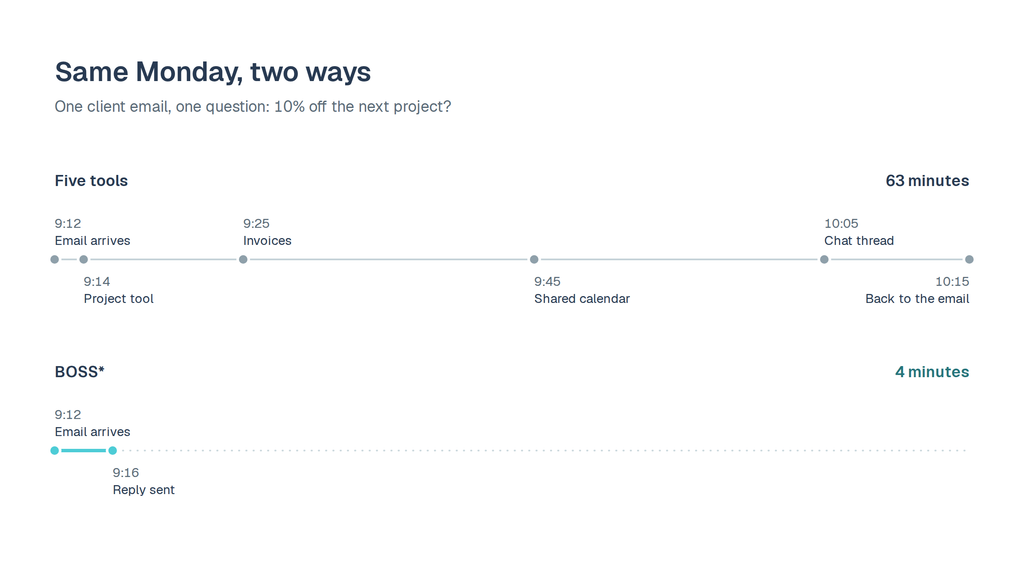
At 9:14 you open the project tool. The hours are there, but the budget lives in a spreadsheet, so you open that too, after searching through few budget spreadsheets… At 9:25 you’re in the invoicing tool or yet another spreadsheet checking payment dates manually, at 9:45 in the shared Google calendar, and at 10:05 in a chat thread from last month, because someone promised the client something on a call or maybe considered taking off this week but did not request the time off yet.
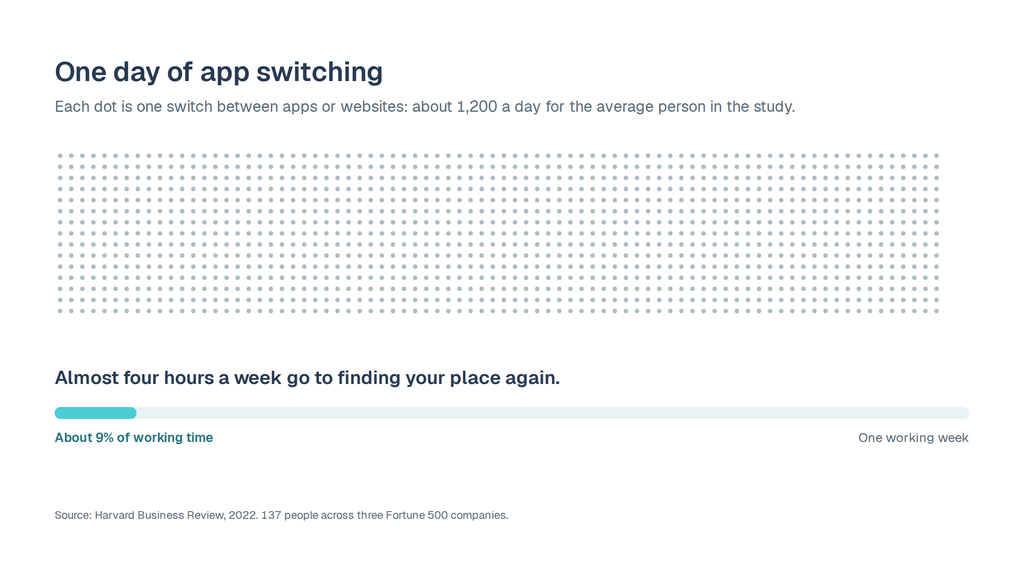
None of this is unusual. Researchers in 2022 writing in Harvard Business Review followed 137 people at three Fortune 500 companies and counted about 1,200 switches between apps and websites per person, per day. Getting reoriented after each one added up to almost four hours a week, roughly 9% of their working time.
The lost time is the cheap part… At 10:15 you go back to the email, because by now you’ve forgotten exactly what they asked.
AI without context
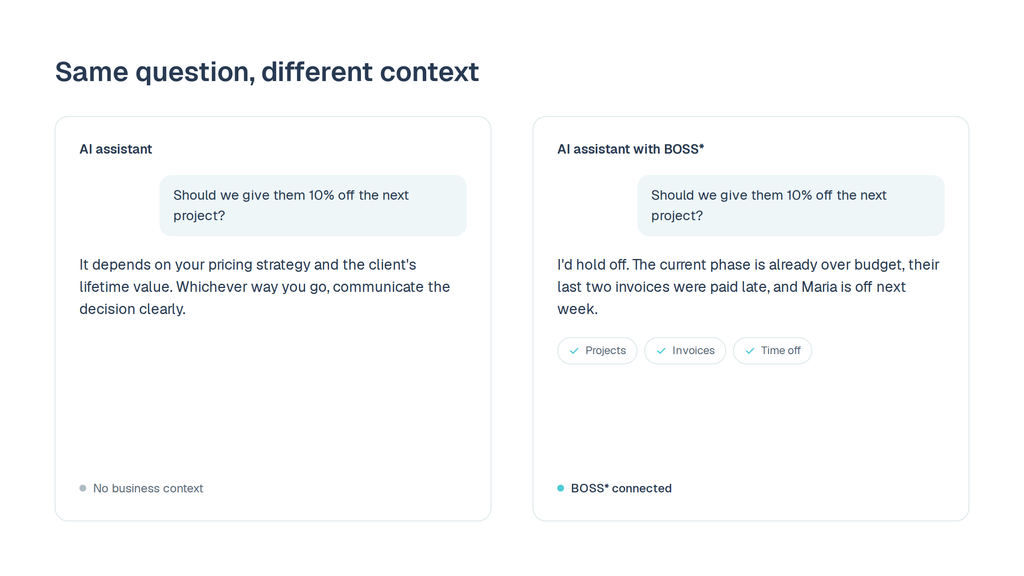
So you try a shortcut. You paste the email into an AI assistant and ask whether to give the discount…. The answer is well written. It covers pricing strategy, customer lifetime value and the importance of clear communication. All of it is correct, and none of it is about your client or your specific situation.
That isn’t the model’s fault. It knows what you put in the chat and nothing else, and nobody pastes their whole company into a prompt. Copying context into a chat window is just context switching with extra steps.
Where context gets lost
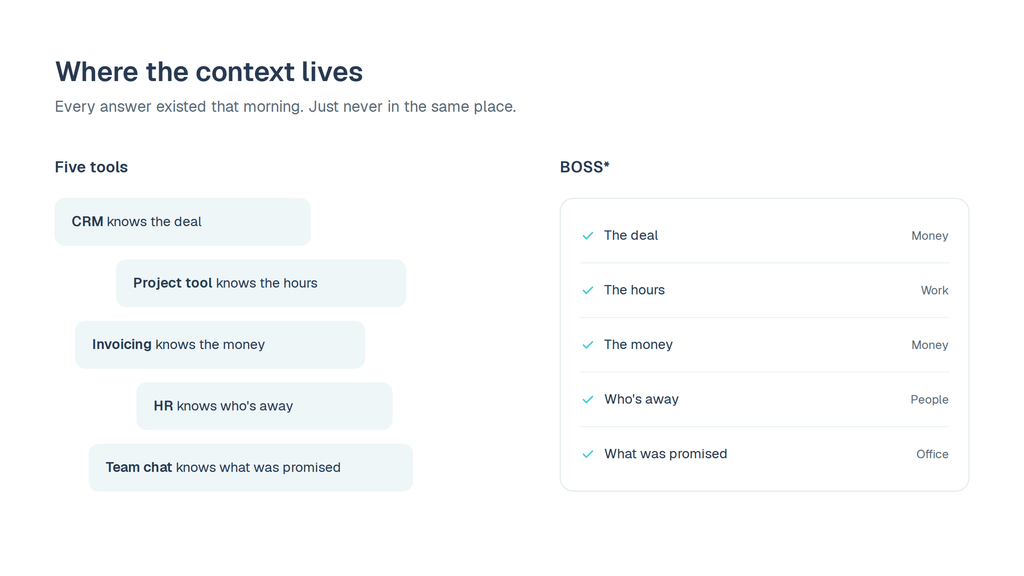
Every answer existed that morning. The business context was all there, just spread across tools that have never heard of each other.
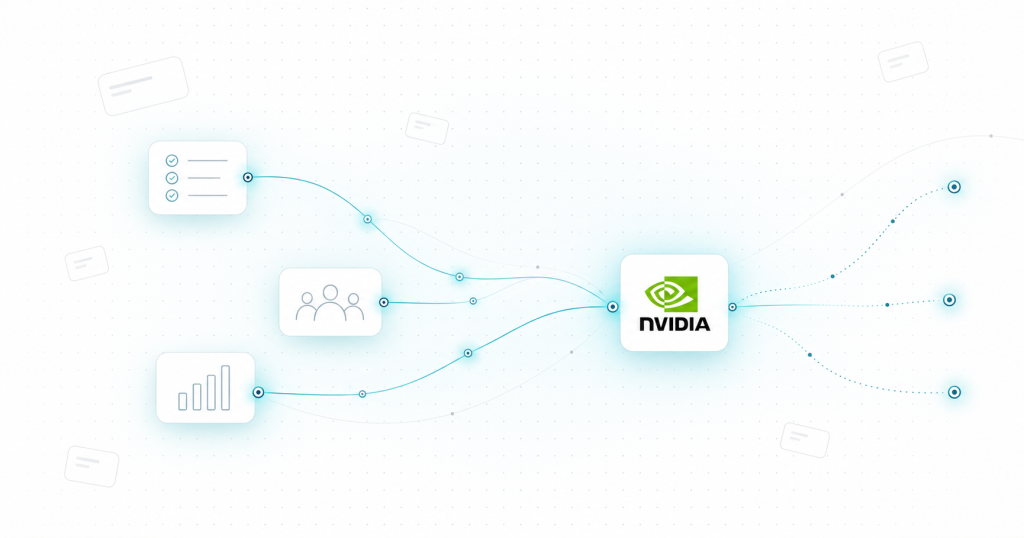
The CRM knows the deal. The project tool knows the hours, the invoicing tool knows the money, HR knows who’s away, and the team chat knows what was actually promised.
Nobody plans tool sprawl. It builds up one reasonable decision at a time, and integrations hold it together until a sync quietly fails. Every question worth asking needs at least two of those tools. Monday’s needed five.
Tool sprawl used to be mostly a human problem, but now it’s an AI problem too. An AI agent that sees your CRM but not your projects, invoices or people only sees fragments of the business. Better AI doesn’t fix missing context.
The same Monday, in one place
I’ve been working on this problem since 2014. Two attempts didn’t make it. The third became Aqtos BOSS*, and we run our own company on it.
BOSS* keeps projects, clients, people, invoices, expenses, chat and calendar in one system. One Ctrl+K searches all of it. BOSS* costs $10 per user/month, minimum 5 users. All features and unlimited AI agents are included. So let’s run Monday again.
9:12, same email. You ask the same AI assistant the same question, except this time it’s connected to BOSS*. It comes back with facts: the phase is already over budget, the last two invoices were paid late, and Marija is off next week. Practically the same AI assistant with the same question, but with a different context.
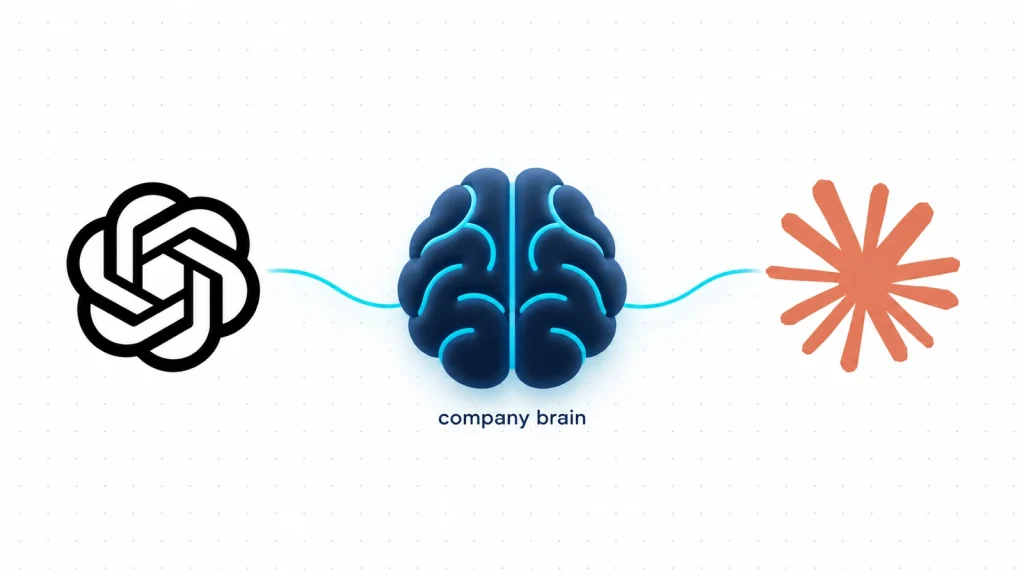
Because the context lives in one place, AI can finally use it. Aqtos MCP connects BOSS* to AI assistants like Claude, so you can ask about your real tasks, clients, invoices and calendar, and have it create tasks or schedule meetings for you. It only sees what your role can see, so the intern’s AI doesn’t get a look at payroll.
The reply goes out at 9:16. It says no, nicely.
Get your company together: watch the product tour, start a 7-day free trial at aqtos.com, or book a demo.
 fits
fits